The Second Job
There's a job that never gets posted, never gets negotiated, and pays nothing. Today, we're announcing updates to our AI model and user experience that make it disappear.


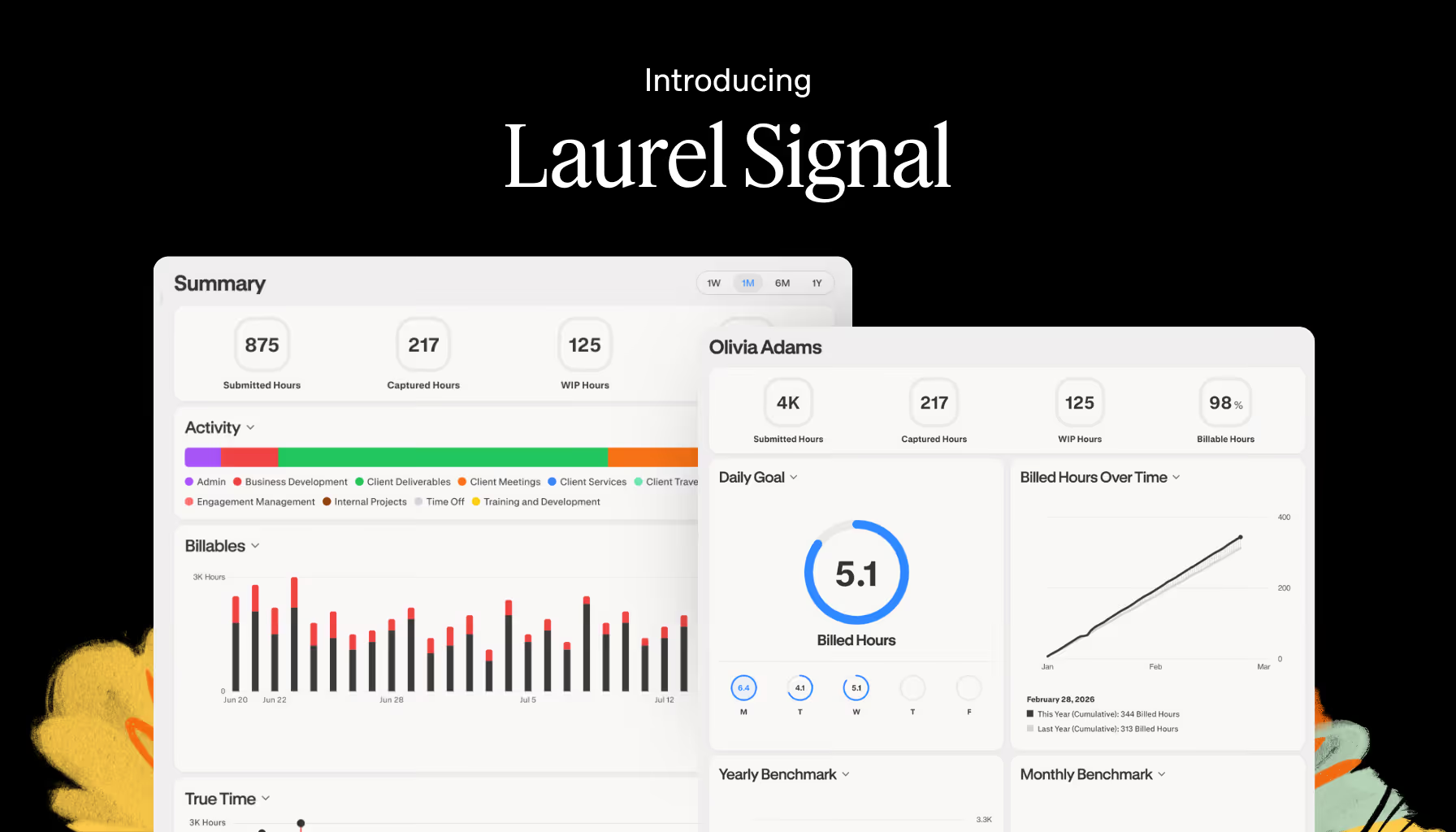
Today, Laurel is announcing a significant upgrade to the timekeeping experience: a new AI model and experience updates that anticipate your timesheet, shape your entries, and make the cognitive work of timekeeping something you no longer have to do yourself. The result is an experience that's more complete, more accurate, and more effortless than anything we've built before.
Here's what we were solving for
There's a job that never gets posted and never gets negotiated. It doesn't appear in any offer letter, carries no title, and pays nothing. And almost every lawyer and accountant is doing it anyway.
That job is timekeeping.
The work that was never supposed to be yours
A lawyer's job is to analyze, argue, and synthesize complex information into positions that protect their clients. An accountant's job is to interpret, advise, and translate financial complexity into guidance that informs their clients' most consequential decisions. Both build strategy, manage relationships, and make judgment calls that can't be automated, delegated, or replaced.
Now think about what they do at the end of that day. They open a timesheet and try to reconstruct it.
The call at 9am—how long was that?
The research before the client meeting—did I log it?
The email thread that turned into a 45-minute drafting session—where does that go?
Quinton Washburn, CPA and Principal at The Bonadio Group, describes it plainly:
When I couldn't remember how long something took, I'd make an educated guess, and that guess was almost always under what I actually spent. At tax time, there's something like that every single day.
This is the second job: the unpaid administrative burden that accumulates around the real work, and that every professional in a billable-hour firm has simply accepted as part of the deal. It shouldn't be.
The conversation about timekeeping usually focuses on the burden, which is real, but misses something big. Reconstruction is inaccurate. By 6pm, the call that ran long has blurred into the one before it, the research thread that took forty minutes feels like twenty, and the document review that kept getting interrupted has lost its shape entirely. These aren't failures of diligence. They're just how memory works. And every one of those moments is billable hours that were earned, delivered, and never recorded.
Multiply this across every timekeeper at your firm, across every working day of the year, and the number is not trivial. Firms aren't losing revenue because their people aren't working hard enough. They're losing it because the system for recording that work was designed for a world where humans had no better option.
The wrong arrangement, corrected
The fundamental problem with traditional timekeeping is structural. It asks humans to maintain a precise, real-time log of their own activity while simultaneously doing the work itself.
Laurel solves this by running in the background while your team does their actual jobs. Every email, every call, every document, every research session is captured as it happens—not reconstructed afterward.
As Washburn puts it: "Timekeeping is almost an afterthought. I know I can wait until the end of the day, and everything will already be there."
The result is a more complete picture of the work that actually gets done and recently, it's gotten even more complete.
What's new today
Laurel creates an effortless timekeeping experience in three stages, each building on the last.
First, capture. Work activity is recorded automatically, in the background, as it happens. Nothing depends on a professional remembering to log it later.
Second, organization. Laurel's activity feed brings the day into focus—related work is threaded together, everything where it belongs. A timekeeper can see their entire day at a glance, without hunting or reconstructing. Julliana Von Bernewitz, IT Director at Paul Frank + Collins, found this especially meaningful:
Laurel has been especially valuable in supporting different timekeeping styles and approaches, helping ensure work is captured more consistently and comprehensively.
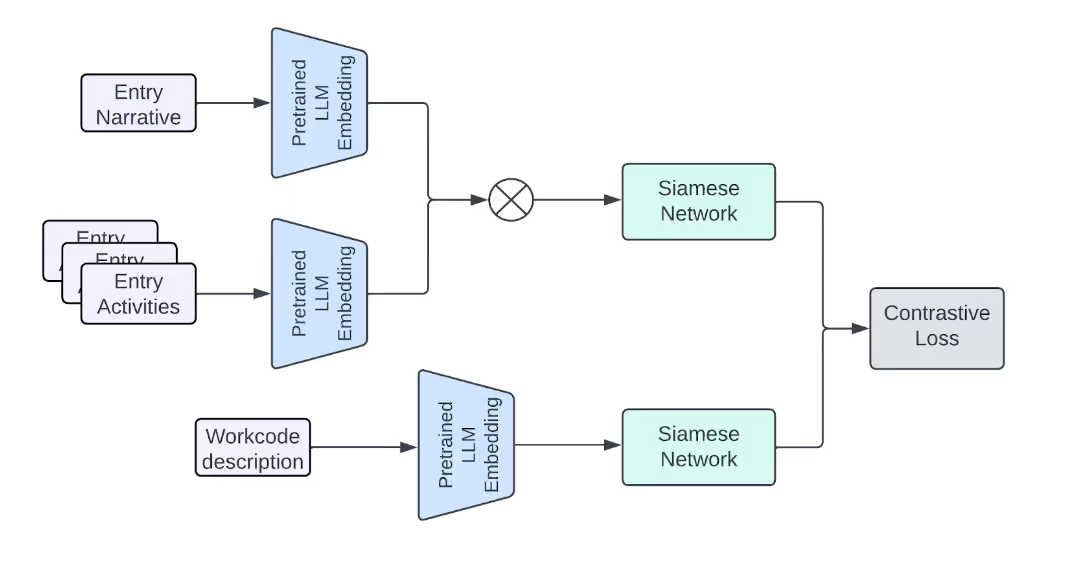
Third, anticipating the timesheet. This is where we've made big strides recently. Our new AI model doesn't just log your day, it initiates time entries for you and maps your activity to the right matters or projects. Then, we finish the job by assigning the right billing codes and generating a narrative in your voice. You review, edit, and your time is done.
Finally, It's time to quit
The professionals at your firm didn't go to school to fill out timesheets, and they didn't become partners to spend their Tuesday evenings piecing together a workday they've already lived once. The second job was always an imposition, a patch for a problem that software should have solved years ago.
The best firms aren't asking their people to get better at timekeeping. They're getting timekeeping out of their people's way entirely, and finding out in the process that there was more billable time there all along. It just needed to be caught. Your team has already earned it, Laurel makes sure they keep it and that they can get back to what matters.

Continue Reading


.avif)





We transform time into strategic revenue with real AI.


We believe that well-spent days lead to well-lived lives.


.avif)
We obsess over timekeeping so you can keep your time
A fresh start to the week! What needs to be accomplished?

Don’t forget to take moments to stretch, snack, or share funny videos.
You’re halfway through your week. Have you done the important things yet?
The weekend is fast approaching! What are you proud of this week?
It’s Friday! Close your laptop to soak up your surroundings— or keep it open to continue a project you’re passionate about.
Deep breaths. Deep thinking. Deep conversations. (Or, you know, keep things light!)
Close your eyes and think about the week ahead. How will you value your time?
A fresh start to the week! What needs to be accomplished?
Don’t forget to take moments to stretch, snack, or share funny videos.
You’re halfway through your week. Have you done the important things yet?
The weekend is fast approaching! What are you proud of this week?
It’s Friday! Close your laptop to soak up your surroundings— or keep it open to continue a project you’re passionate about.
Deep breaths. Deep thinking. Deep conversations. (Or, you know, keep things light!)
Close your eyes and think about the week ahead. How will you value your time?